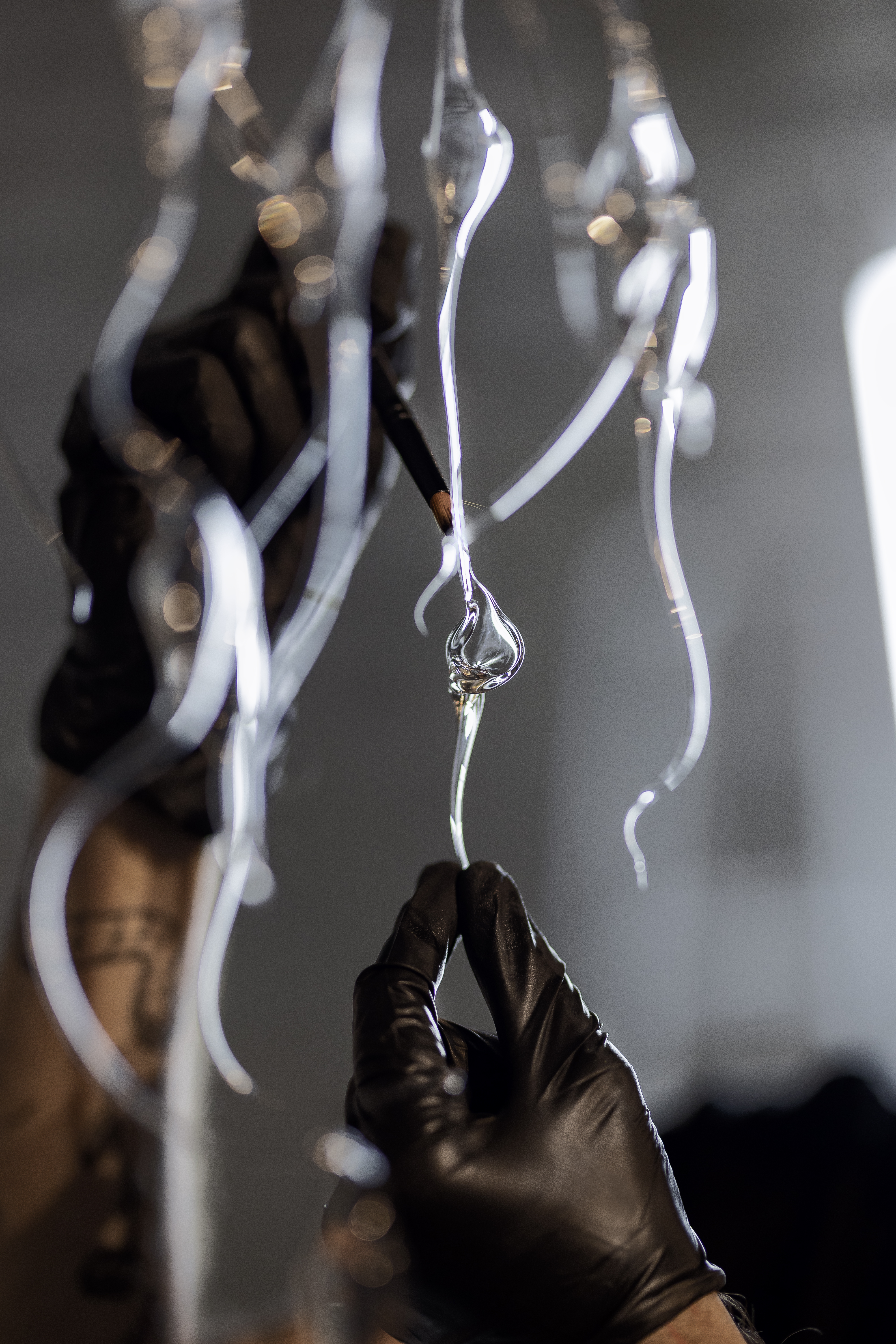
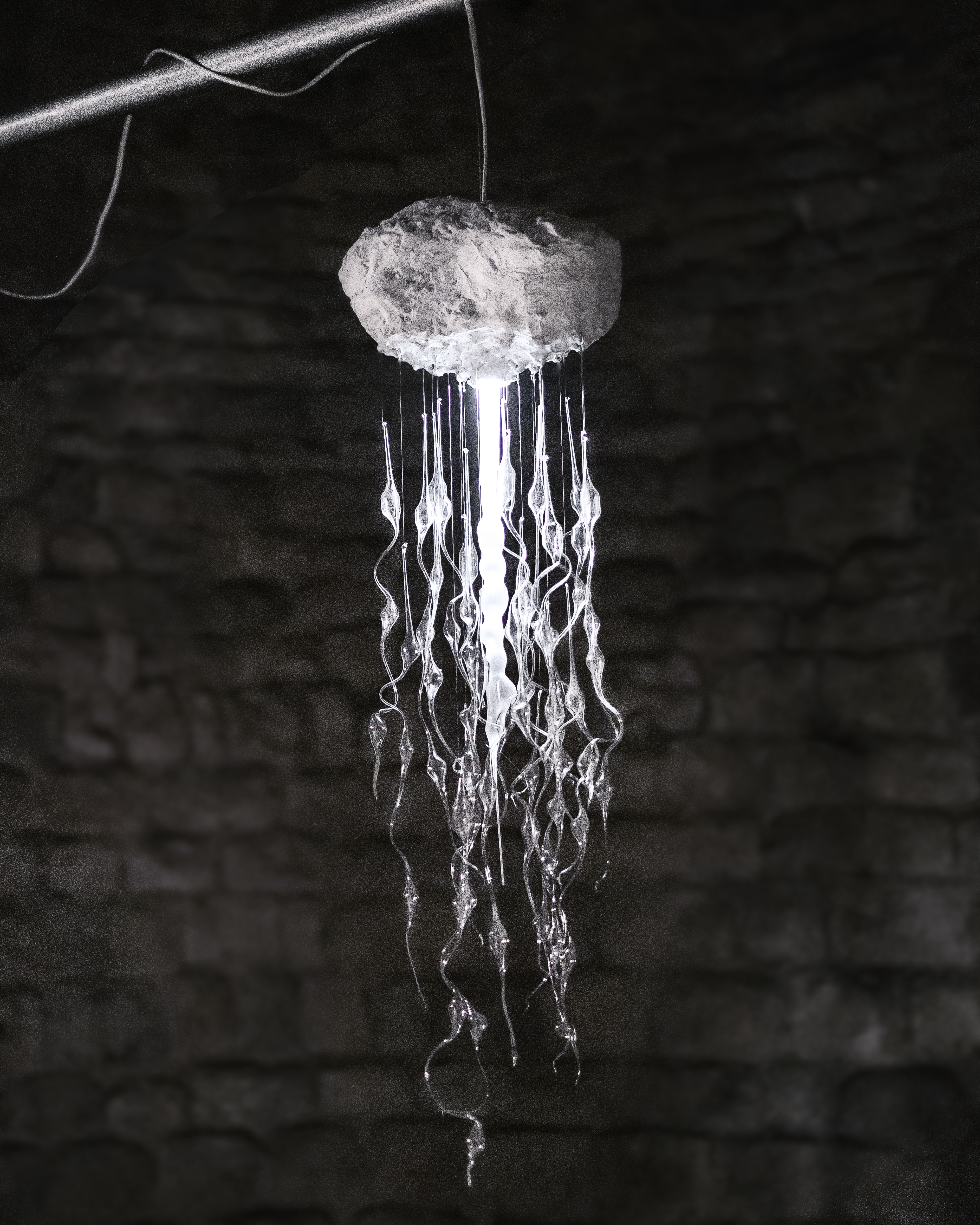
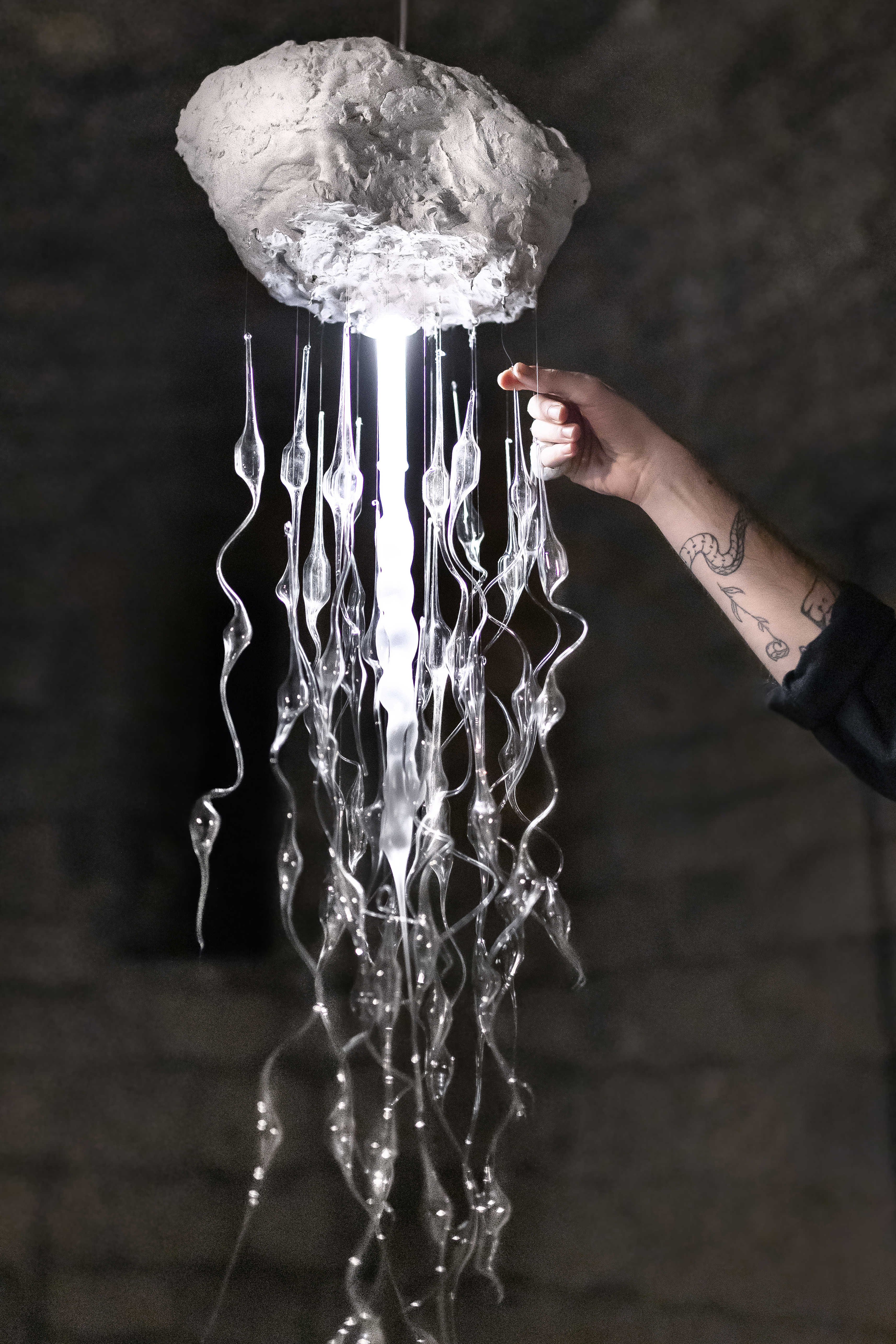
Josep Plaja (Girona, 1996) is a contemporary designer based between Barcelona and the Costa Brava whose work focuses on the study of glass and light through biomimicry. Inspired by bioluminescent animals from the seabed, Plaja combines an aesthetic centred on shape, the rawness of materials, and the relationships established between them.
Graduated in Audiovisuals and Multimedia at the University of Girona / EU ERAM and later completed a Master’s degree in Exhibition Space Design at the Polytechnic University of Catalonia in collaboration with the CCCB.
His work centres on exploring the relationship between light and glass, finding inspiration in bioluminescent creatures and using their natural radiance as a basis for his designs, represented in an abstract and evocative way. Moreover, his creative process emphasises the versatility of materials, allowing each collection and project to adapt to its concept and production environment. This approach not only deepens the connection between the artwork and its place of production, but also encourages new relationships between glass and other refined materials—expanding the possibilities of form, texture, and material interaction while remaining open to both traditional and innovative production methods.
His pieces generate a dialogue between the object and the viewer, attempting to turn the latter into their own prey, much like bioluminescent animals use light to attract and hunt. The attraction generated by light, contrasted with the aggressiveness and fragility of glass, creates a parallel with these creatures that are beautiful yet dangerous at the same time. Through this tension, Plaja reflects on those toxic elements that seduce us purely through their beauty.