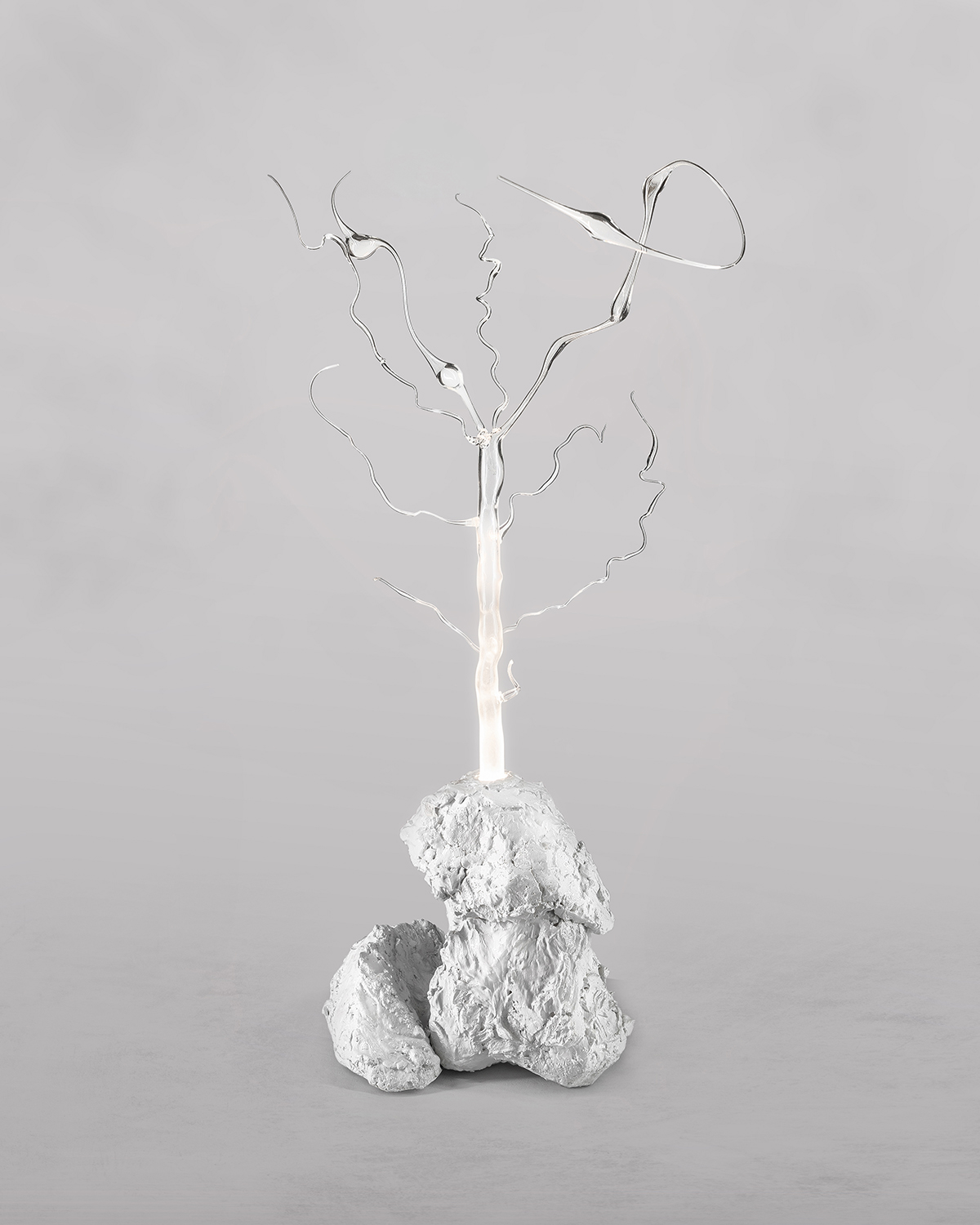
Cestum Veneris II
(Cinturón de Venus II).
Barcelona, 2022.


47 x 36 x 80 cm
Glass, Gypsum and LED light.
Price upon request

The Cestum Veneris species lives in warm waters around the world, especially in the Mediterranean sea. It’s a long ribbon-shaped bioluminescent animal and can swim with meandering movements, thus collecting plankton with its entire surface.

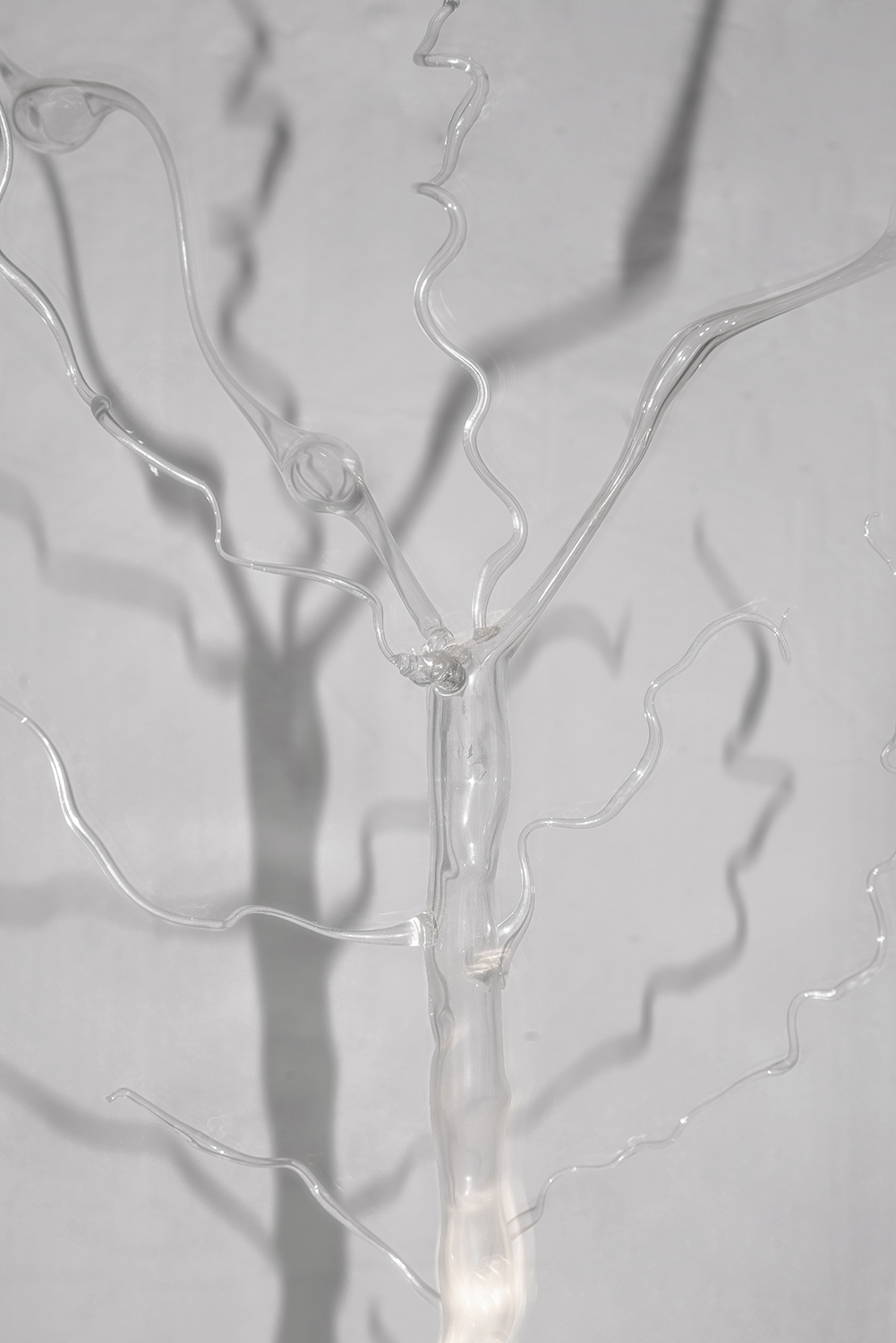
The glass structure shows a spiral shape that expands in space to recreate the meandering movement of this species, which attracts its prey through bioluminescent light, in the same way that the light of the piece attracts the viewer and tries to capture them with its expansive tentacles.

세스툼 베누리스 II(신투론 데 비너스 II).

바르셀로나, 2022.
47 x 36 x 80 cm.
유리, 석고 및 LED 조명.
요청시 가격.

세스툼 베네리스 종은 전 세계의 따뜻한 바다, 특히 지중해에 서식합니다. 긴 리본 모양의 생물 발광 동물로 구불구불한 움직임으로 헤엄쳐 다니며 전체 표면으로 플랑크톤을 수집할 수 있으며, 유리 구조는 공간에서 확장되는 나선형 모양을 보여 주어 생물 발광 빛을 통해 먹이를 유인하는 이 종의 구불구불한 움직임을 재현하며, 작품의 빛이 관객을 끌어 당기고 넓은 촉수로 그들을 잡으려는 것과 같은 방식으로 재현합니다.


Biography


Josep Plaja (Girona, 1996) is a contemporary designer based between Barcelona and the Costa Brava whose work focuses on the study of glass and light through biomimicry. Inspired by bioluminescent animals from the seabed, Plaja combines an aesthetic centred on shape, the rawness of materials, and the relationships established between them.

Graduated in Audiovisuals and Multimedia at the University of Girona / EU ERAM and later completed a Master’s degree in Exhibition Space Design at the Polytechnic University of Catalonia in collaboration with the CCCB.

His work centres on exploring the relationship between light and glass, finding inspiration in bioluminescent creatures and using their natural radiance as a basis for his designs, represented in an abstract and evocative way. Moreover, his creative process emphasises the versatility of materials, allowing each collection and project to adapt to its concept and production environment. This approach not only deepens the connection between the artwork and its place of production, but also encourages new relationships between glass and other refined materials—expanding the possibilities of form, texture, and material interaction while remaining open to both traditional and innovative production methods.

His pieces generate a dialogue between the object and the viewer, attempting to turn the latter into their own prey, much like bioluminescent animals use light to attract and hunt. The attraction generated by light, contrasted with the aggressiveness and fragility of glass, creates a parallel with these creatures that are beautiful yet dangerous at the same time. Through this tension, Plaja reflects on those toxic elements that seduce us purely through their beauty.